3 Ways to Cope With Health Anxiety
Have you ever experienced health anxiety while awaiting a diagnosis or dealing with a medical mystery?
Health anxiety is any kind of anxiety that you feel over your health. In this instance, we’re specifically referencing health anxiety that people experience while waiting for a medical diagnosis. This type of anxiety is sometimes called “scanxiety” in reference to people waiting to get results back from imagining to diagnose what’s wrong.
If you’ve ever dealt with symptoms that feel like a medical mystery, you probably know how frustrating and worrisome it can be to not know what’s going on in your body. It can be impossible to focus on anything else when you’re waiting for potentially life-changing news from your doctor.
This kind of anxiety can feel like intense panic, repetitive racing thoughts, rumination, body aches and illness, digestive upset, and even difficulty breathing. And since you’re waiting for a big unknown thing, it’s hard to imagine ever feeling any differently.
Situations that might cause health anxiety
Waiting for a diagnosis
Waiting for the results of testing that could lead to a diagnosis
Fearing life-changing news from your doctor
Feeling like a medical mystery because you have symptoms your providers can’t figure out
Worrying you’ll be diagnosed with something that a family member had
Fearing that your symptoms are getting bad again
Knowing something is wrong but struggling to find providers who take you seriously
Concerns that your current conditions are getting worse
If you’re dealing with health anxiety, you might feel like there’s nothing you can do to make yourself feel better. However, there are some ways to make dealing with the unknown a little less distressing. Give these coping skills a try:
Use the container method
This is a strategy borrowed from EMDR therapy to help reduce anxiety and manage the intrusive thoughts that often accompany health anxiety. In this exercise, you imagine a container in your mind where you can safely store your fears, worries, memories, thoughts, etc. until you’re feeling resourced enough to take them out and deal with them again (like with a therapist).
To use the container method, picture any type of container in your mind. It can be something homemade, it can be something you find at the store, it can be fancy, it can be simple. Just imagine a container with a lock on it. Imagine opening the container, and visualizing placing all of your distressing thoughts inside. You’re not abandoning them entirely; you’re just setting them aside until you’re more capable of managing them safely. Finally, imagine locking the container.
Once your fears and distressing thoughts are safely inside the container, you can remind yourself that you’ll deal with them when you're more resourced. In therapy sessions, we use the container to hold onto any thoughts or feelings that are left after a session until the next meeting, so you don’t have to worry about dealing with all of those intense opened up feelings from therapy while you’re back at home on your own.
Distract yourself
Distraction has a bad reputation, but there are times when it’s completely appropriate as a coping skill. Health anxiety is all consuming, so sometimes the only thing you can do is distract yourself to stop feeling the distress. Distraction can sometimes lead to avoidance, but in the case of health anxiety, it gives you something else to do instead of spiral while you wait for answers.
There are lots of different ways to distract yourself. You can try a new hobby or craft; get into a new show (reality shows usually have lots of drama and lots of seasons to catch up on, which can be engrossing); read a good book; take an online class on something you’re interested in; get lost in a social media scroll (as long as you’re not getting drawn into more health-related topics on there); the list is endless. Don’t punish yourself for needing an escape when you’re overwhelmed with health anxiety.
Lean on your community
We aren’t meant to get through hard situations alone. When you’re experiencing health anxiety, it’s crucial to lean on your community to help you get through. Not only can friends help distract you from the distressing thoughts you’re having, but they can be powerful advocates for you as well in a healthcare system that is hard to navigate.
Make regular, standing plans with people you’re close to so you don’t have to navigate this anxiety alone. Take time for things you enjoy, with the people you care about. Ask for help when you need it. Let people know you’re looking for distractions while you wait for news. Bring an advocate with you to appointments, so you don’t have to do it alone. There are lots of ways that the people who love you can show up for you while you’re dealing with health anxiety.
If you would like more support with managing health anxiety or life with chronic illness, our therapists at Hope+Wellness can help. Reach out today to make an appointment!


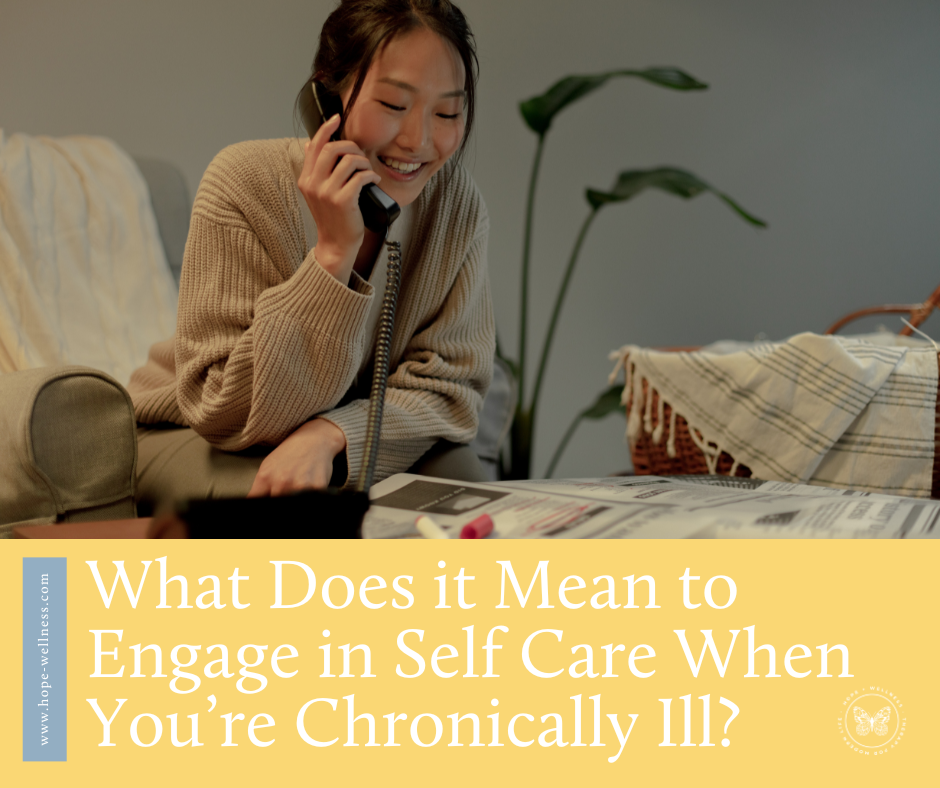




Health anxiety is distressing while you're waiting for a diagnosis or other results. Here's how you can cope.